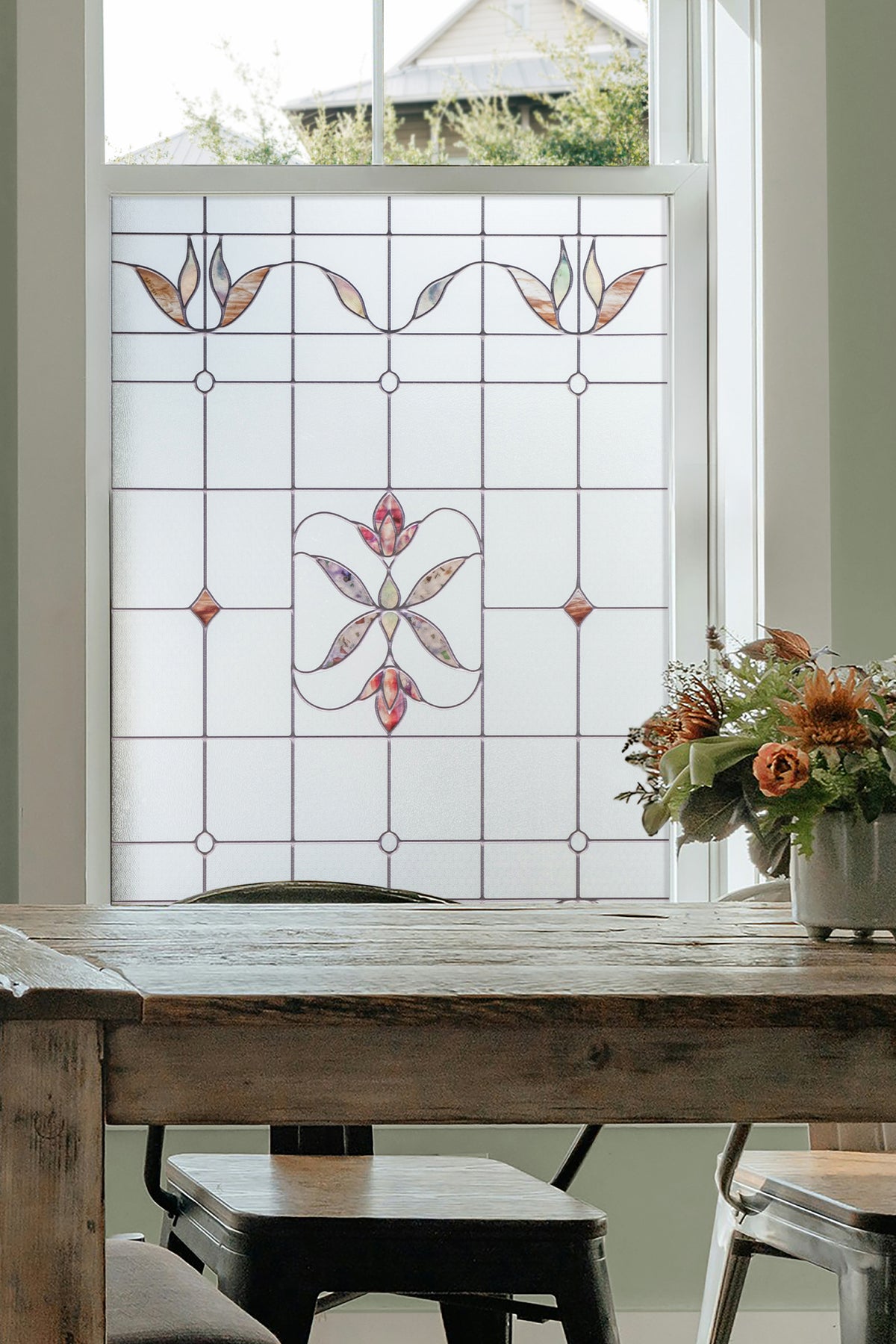
Window film is one of the simplest ways to transform a space. It softens light, adds privacy, and introduces pattern without the permanence or cost of etched or stained glass. But not every room has the same needs. Some spaces call for full privacy, while others benefit from a touch of decorative detail that still lets the daylight pour in.
If you are wondering where to begin, this room-by-room guide can help you choose the right window film for each area of your home.
Bathroom: Privacy Without Losing Light
Bathrooms often require the highest level of privacy, but that does not mean they have to feel dark, dreary, or closed in. Window film allows natural light to filter through while obscuring visibility from the outside.
Frosted, textured, or rice paper-inspired films (see below) work especially well here because they diffuse light softly across the room. The result feels calm and spa-like rather than stark. Look for films that offer full coverage and medium-to-high privacy, especially for windows facing neighbors or the street. The soft texture also pairs beautifully with wood, tile, stone, and other bathroom materials.

Kitchen: Light, Pattern, and Personality
Kitchens can be full of activity and natural light. Window film can introduce a subtle decorative element while still keeping the space bright. Floral patterns, geometric repeats, or delicate leaded designs can bring charm to kitchen windows without overwhelming the room. Because kitchens often have cabinets, plants, and open shelving nearby, window film acts as a lightweight layer of pattern that balances the space. Films like Valencia (below) that mimic stained glass can also look especially beautiful above a sink or breakfast nook where sunlight hits throughout the day.

Living Room: Decorative Privacy
Living rooms often face the street or front yard, which can make privacy a challenge. Window film offers a way to create separation while still keeping the space welcoming and bright. Leaded glass designs or larger decorative patterns work well in these spaces because they feel architectural and intentional. They add visual interest to larger windows while allowing plenty of daylight to pass through.
For front windows, many homeowners choose films that look good from both the inside and outside, enhancing curb appeal and interior design. All of Artscape's window films are designed with this in mind and look beautiful on both sides.

Bedroom: Soft Light and Gentle Privacy
Bedrooms benefit from softer light to help regulate the nervous system and support a sense of tranquility. Window film can help filter harsh sunlight while providing privacy without relying on heavy, dusty curtains or blinds. Subtle patterns or lightly textured films are often the best choice here. They create a peaceful atmosphere and allow morning light to gently glow through rather than shine directly into the room. For bedrooms facing close neighbors, a slightly more opaque design, like Flight (below), can provide comfort without sacrificing brightness.

Entryways and Doors: A Design Moment
Front doors and entryway windows are perfect places for decorative window film. Because these spaces are often the first thing guests see, a patterned or leaded style like Rochester (below) can create a gorgeous focal point. Glass panels in doors, sidelights, and transom windows are ideal candidates. Window film adds privacy while still letting natural light brighten the entryway. Many homeowners choose designs inspired by traditional stained or leaded glass for these areas because they feel timeless and welcoming.

Home Offices: Reduce Distractions
Home offices have their own set of needs. Too much visual distraction outside the window can make it difficult to focus. Window film can soften views without blocking light, helping create a workspace that feels calm and productive. Neutral films that are textured, lightly patterned, nature-inspired, or atmospheric, like clouds (below), are often the best option here. They obscure direct sightlines while still maintaining a bright work environment.

A Flexible Design Layer
One of the biggest advantages of window film is flexibility. Unlike permanent glass treatments, window film can be applied quickly and changed as your style evolves. It adds privacy where you need it, decorative detail where you want it, and light where it matters most.
If you are in the process of updating a bathroom window, adding charm to the kitchen, or creating a welcoming entryway, the right window film can make each room feel more intentional and inspired.
Explore all window films.