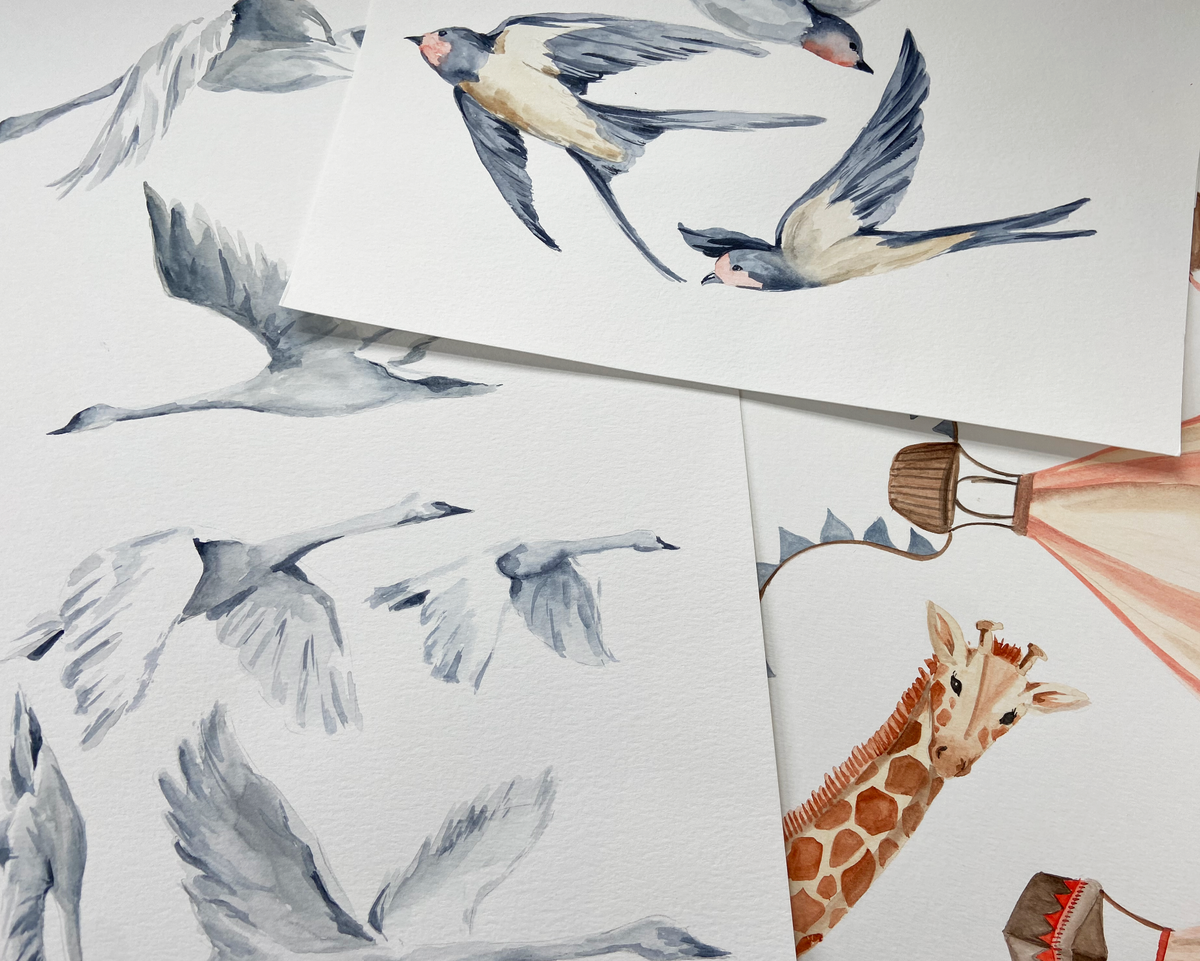
British-born surface designer and painter Kate Eldridge creates wallpaper that feels timeless and personal. From her San Francisco studio, she transforms hand-painted watercolors into layered botanical patterns inspired by nature, British heritage, and the beauty of everyday life. Before launching her own studio, Kate spent more than a decade in fashion design, eventually leading print and pattern teams for major brands. Today, she brings that experience to bespoke wallpaper and textile collections, always returning to watercolor as her favorite medium and painting as a lifelong form of self-expression.
We sat down with Kate to talk about her creative process, her sources of inspiration, and why she believes every room should feel like a sanctuary.

Your work has such a distinctive softness. Has painting always been part of your life?
Absolutely. My dad was a painter, so it's something that's been with me my whole life. Even before I worked in the industry, I was always painting. It's grounding for me. It's how I express myself. I'm not a huge talker, so my art has always been my way of communicating.
You began your career in fashion. How did you find your way into surface design?
I studied fashion design and worked in the industry for about ten years, but I always loved the print side of things. Painting and sketching were my favorite parts of the job. In 2017, I decided to focus on surface pattern design. After working with companies like Pottery Barn Kids, I eventually built my own business creating hand-painted designs for wallpaper, textiles, and other interiors.

Where does a new design usually begin?
Usually with a sketchbook. I take photographs constantly, especially of flowers, and I keep a collection of reference books nearby. I'll sketch out ideas, make a mood board, and then I start painting pretty quickly. Once the paint starts flowing, that's often when the design changes. I like to keep the process fluid and let it become what it wants to become.
Your work feels incredibly organic. Do you intentionally leave room for surprise?
Definitely. I've learned not to force things. Sometimes you have an idea in your head, but once you start painting, it wants to go somewhere else. If something isn't working, I've learned to trust that instinct, step away, and let it evolve naturally.
Nature appears throughout your collections. What keeps drawing you back?
I've always loved botanical subjects because I love the feeling of bringing the outdoors inside. I want the spaces people live in to feel calm, restorative, almost like their own sanctuary. That's really what I'm imagining when I design wallpaper.

Your color palettes are beautifully restrained. What colors do you find yourself returning to?
I'm definitely drawn to earthy colors. Soft greens, peachy pinks, anything romantic and natural. Green is probably my favorite color because it immediately makes me feel calm. Bright colors have never really been my thing. I always come back to palettes that feel connected to nature.
Are there artists or movements that continue to inspire you?
Monet has always been one of my favorites. I also draw a lot from British heritage, Victorian detailing, and the Arts and Crafts tradition. I love period dramas, architecture, textiles, clothing. There are so many beautiful details to discover. I also admire fashion designers like Erdem. There's a romantic quality to his work that really resonates with me.
Watercolor is your signature medium. What keeps bringing you back to it?
It's my comfort zone. It feels completely natural to me. I use gouache or digital tools when the project calls for them, but watercolor always feels the most human. There's a softness and flexibility to it that I really love. If you make a mistake, it becomes part of the painting rather than something to cover up.

What excited you about collaborating with Artscape?
Meeting Kate Troyer was a huge part of it. She gives wonderful direction, but she also really respects my practice and trusts my instincts as an artist. That kind of creative freedom is incredibly important to me. It makes the work feel collaborative rather than prescriptive.
Finally, what do you hope people feel when they live with your work?
I hope they feel calm. Maybe a bedroom, a nursery, or a living space; I want people to feel like they've created a little sanctuary. Somewhere that feels peaceful, restorative, and connected to nature.