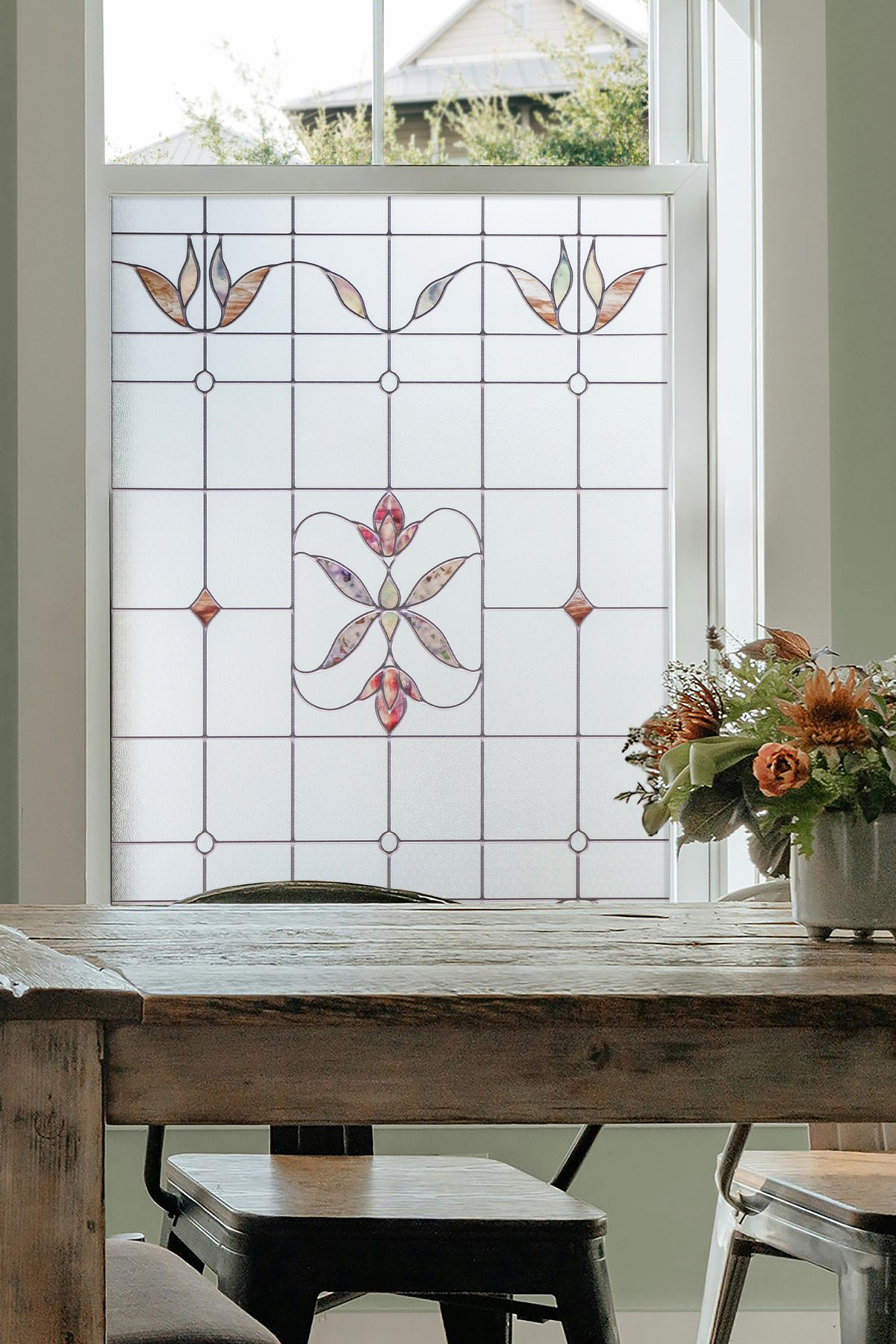
A well-worn wooden table, an antique lamp, a floral wallpaper that looks vaguely familiar, even if you can't quite place where you've seen it before. There's something comforting about a room that feels like it has a history. These are the details that give a home character, a sense of belonging to another time while remaining present.
As interiors become increasingly personal and expressive, traditional patterns and decorative details are finding new life. Antique textiles, intricate botanicals, hand-drawn illustrations, and ornamental flourishes are appearing alongside contemporary furnishings, creating spaces that feel layered, lived-in, and refreshingly individual. This renewed interest in nostalgic interior design isn't necessarily about recreating the past. It's about borrowing from it, finding beauty in old traditions, and giving familiar designs a new perspective.
The Return of Craftsmanship and Character
Before wallpaper became a widely accessible decorative material, elaborate patterns were painstakingly woven, embroidered, painted, and printed by hand. These traditional techniques produced designs rich with texture, variation, and the unmistakable mark of human craftsmanship. In an era of heavy-hitting digital media, those qualities feel especially appealing. There's a growing appreciation for visual texture, intricate detailing, and patterns that reveal something of how they were originally made.
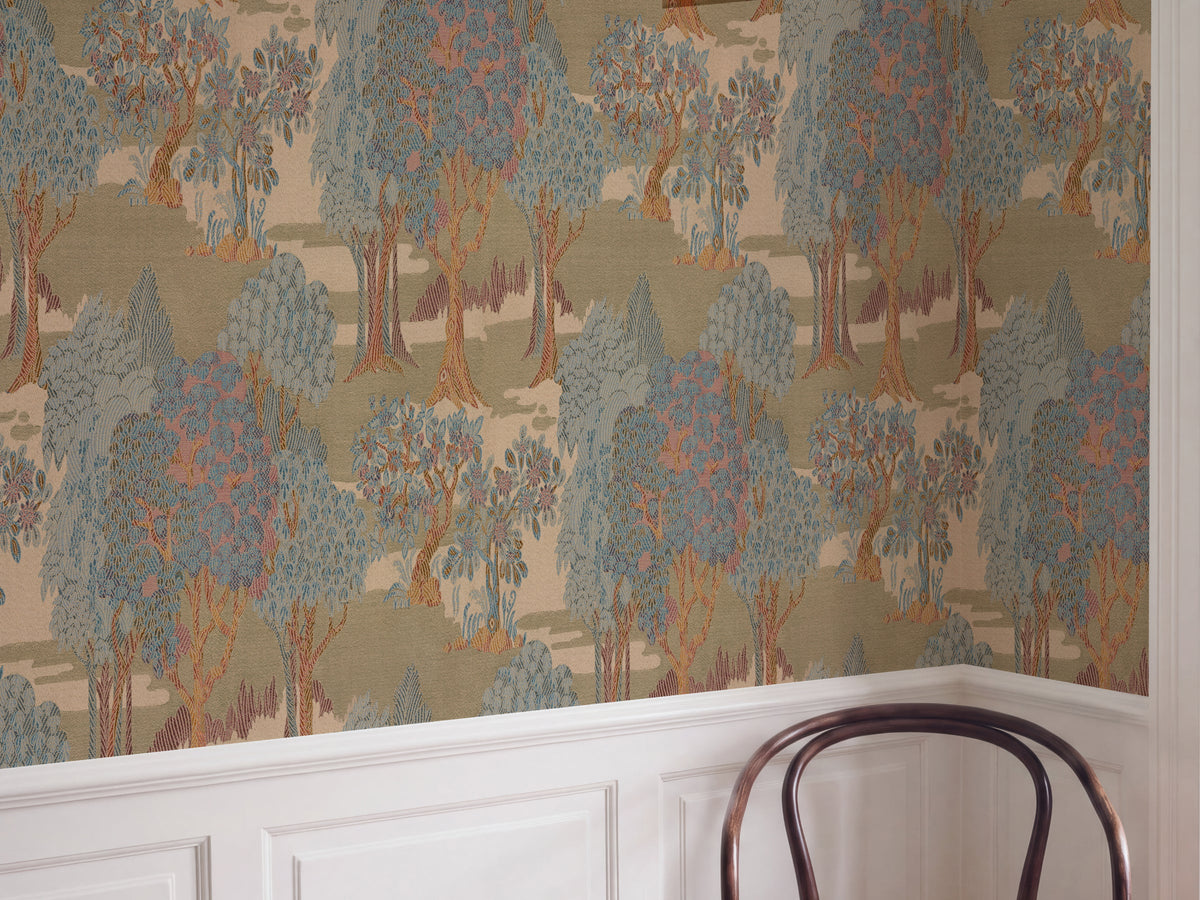
Orléans Forest draws inspiration from an antique French tapestry. Its layered botanicals and softened edges evoke the depth of hand-woven textiles, bringing a sense of history and quiet grandeur to contemporary walls. Paired with modern furnishings and natural materials, the design feels less like a period piece and more like a richly textured backdrop for everyday life.

Similarly, Woven Grove takes its cues from an embroidered weaving, with intricately rendered trees, leaves, and woodland textures that celebrate the irregular beauty of handmade objects. Its organic forms and earthy character feel right at home in spaces that embrace natural materials, vintage furniture, and a little imperfection.

Then there's Calicot, a large-scale floral rooted in the historic Indienne tradition. Inspired by the richly patterned cotton textiles that traveled from India to Europe during the 17th and 18th centuries, its flowering branches and curling leaves carry a sense of movement and ornamental rhythm. The generous scale makes it especially compelling in modern interiors, where a historic pattern can become the focal point of an otherwise understated room. These designs remind us that craftsmanship never really goes out of style. It simply finds new ways to be appreciated.

A Fresh Look at Old-World Ornament
For years, pared-back interiors dominated design conversations. Clean lines, neutral palettes, and minimal decoration became synonymous with contemporary living. But ornament is finding its way back into the picture, bringing movement, personality, and decorative exuberance along with it. Art Nouveau offers a particularly beautiful example. Emerging at the turn of the 20th century, the movement drew inspiration from nature, favoring flowing lines, botanical forms, and intricate compositions over rigid geometry.
Bernhardt captures this sensibility with graceful lines radiating outward from a central motif. Its symmetrical composition creates an elegant rhythm across the wall, while its organic curves feel contemporary.

Berry Bramble, reimagined from a 1905 German Jugendstil design, takes a softer approach. Winding stems, delicate leaves, and clusters of berries form an intricate botanical repeat, lending the pattern a quiet, natural elegance.

And then there's Josie Cats, another design originating in Germany in 1905. Curious cats prowl through winding vines, butterflies, and flowers, bringing a playful twist to the movement's flowing ornamentation.

What makes these patterns feel fresh today is the way they're used. An elaborate botanical wallpaper can be paired with streamlined furniture, sculptural lighting, or contemporary artwork. The contrast between old and new allows each element to stand out, creating a room that feels collected rather than carefully coordinated.
The Charm of Traditional Florals
Not every nostalgic design needs to make a grand statement. Some of the most enduring patterns are also the most understated. Small-scale florals, delicate branches, and softly repeated botanical motifs have decorated interiors for centuries. Their appeal lies partly in their familiarity, but also in their versatility. They add warmth and visual interest without necessarily commanding attention.
Petite Fleur, drawn from a mid-18th-century French woodblock print, captures this softer side of traditional design. Its tiny blossoms and rhythmic spacing recall the charm of early printed wallpapers, while softened contrast and a restrained palette make it suited to modern interiors.

Morning Dew offers a similarly gentle approach. Reworked from an antique paper design, its slender branches and delicate leaves create a graceful repeat that feels timeless and serene.

These patterns can be lovely in bedrooms, hallways, reading nooks, and other intimate spaces. Paired with natural wood, linen, vintage ceramics, or contemporary furnishings.
A Little Whimsy Goes a Long Way
One of the more delightful aspects of historic decorative design is its willingness to be playful. Long before whimsical interiors became a contemporary trend, artists and craftspeople were filling textiles and wallpapers with fantastical creatures, curious scenes, and weird, imaginative little worlds.
Fable, originally block-printed in France in the 1860s, is a wonderful example. Frogs gather for a picnic, a stork pauses beside a vessel, and hares bound through a woodland filled with ferns and bellflowers. There's something wonderfully unexpected about the scene, which feels both antique and entirely original. Reimagined in three distinct palettes, Fable brings storytelling and a touch of humor to contemporary interiors. It could be equally charming in a cozy reading room, a powder room, or a bedroom filled with collected treasures.
Funfair offers another interpretation of nostalgic whimsy. Inspired by a French wallpaper from the 1930s, its hot air balloons, carousel horses, cottages, and fairground scenes recall the joyful simplicity of early illustrated storybooks and vintage animation.
Part of Artscape's Design Your Way Collection, Funfair can be customized in color and scale, allowing its playfulness to take on an entirely different personality depending on the space.

These designs make a compelling case for decorating with humor. A beautiful home should never take itself too seriously.
Making Nostalgia Feel Modern
The secret to decorating with vintage-inspired wallpaper isn't to recreate a room from another century. It's to find a balance between the familiar and the unexpected.

A few thoughtful combinations can make traditional patterns feel entirely new:
-
Mix different eras. Pair an ornate floral wallpaper with contemporary lighting, a midcentury chair, or a modern sofa. The contrast keeps the room from feeling overly traditional.
-
Let pattern lead. Choose a wallpaper you love and build around its colors, textures, and overall mood rather than trying to match everything perfectly.
-
Balance decorative and simple elements. Intricate patterns often look their best alongside clean-lined furniture, natural materials, and a little breathing room.
-
Embrace the collected look. Vintage finds, family heirlooms, contemporary artwork, and handmade objects can coexist beautifully. A room becomes more interesting when everything doesn't come from the same era.
-
Make room for personality. Whether it's a whimsical woodland scene or an elaborate botanical, choose patterns that make you feel something. The most memorable interiors are rarely the most predictable.
The Past, Beautifully Reimagined
Perhaps the most appealing thing about nostalgic design is that it doesn't belong to any one moment in time. A pattern created two hundred years ago can feel just as relevant today, especially when it's given room to live alongside contemporary ideas and personal expression.
Historic wallpapers carry traces of the people, places, and creative traditions that brought them to life. Weaving those designs into modern homes allows their stories to continue, with new colors, new contexts, and new interpretations.
And maybe that's the real beauty of the new nostalgia. It recognizes that good design has a way of finding its place, generation after generation.
Explore Artscape's collection of vintage-inspired wallpapers.